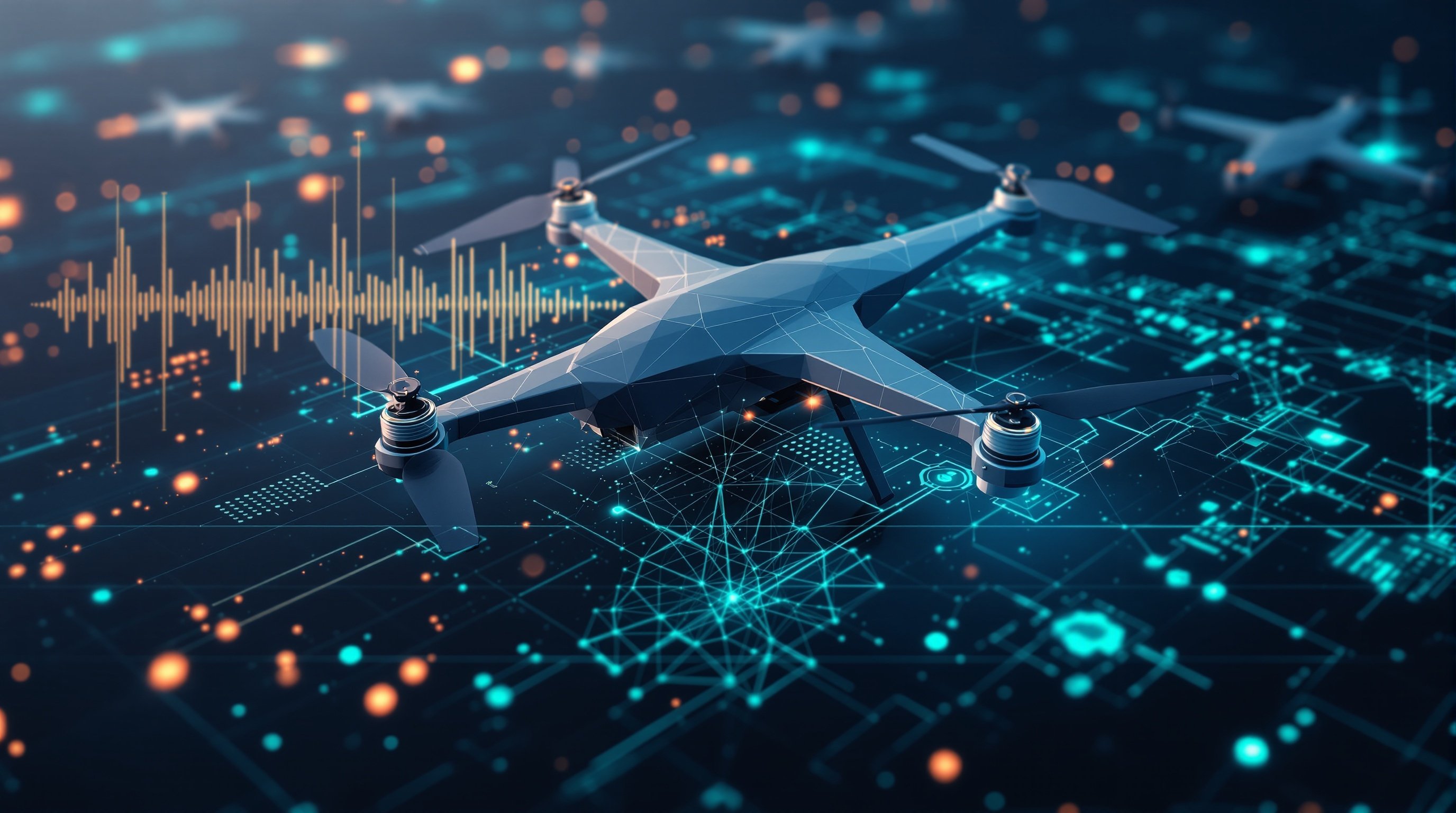
startup
AI Defense Startup Secures $6M to Deploy Voice-Controlled Military Drones
An artificial intelligence defense startup has raised $6 million in seed funding to develop voice-controlled AI agents for military drones and defense technology. The round was led by Bessemer Venture Partners.
# AI Defense Startup Secures $6M to Deploy Voice-Controlled Military Drones
A defense technology startup focused on artificial intelligence has secured $6 million in seed funding to advance its voice-controlled AI agent platform for military applications. The funding round, led by prominent venture capital firm Bessemer Venture Partners, will enable the company to deploy its technology across drones and other military systems.
## What Happened
The startup, which is developing AI-powered voice control systems for defense applications, announced its $6 million seed round with Bessemer Venture Partners as the lead investor. The company's technology aims to enable military personnel to control drones and other defense systems through natural language voice commands, potentially transforming how soldiers interact with autonomous systems in the field.
While specific details about the company's name and technology remain limited, the funding reflects growing investor interest in AI applications for defense and national security. The startup joins a growing ecosystem of defense-tech companies leveraging AI to modernize military capabilities.
## Why It Matters
The integration of voice-controlled AI into military systems represents a significant shift in human-machine interaction for defense applications. Traditional drone and military system controls require extensive training and often involve complex interfaces that can be challenging to use in high-stress combat situations.
Voice control offers several potential advantages:
- **Reduced cognitive load**: Soldiers can issue commands naturally without navigating complex menus
- **Faster response times**: Voice commands can be executed more quickly than manual controls
- **Hands-free operation**: Personnel can control systems while performing other critical tasks
- **Accessibility**: Voice interfaces lower the training barrier for operating advanced systems
For military operations, these improvements could translate into tactical advantages, particularly in scenarios requiring rapid decision-making and coordination of multiple autonomous systems.
## Technical and Operational Challenges
Deploying voice-controlled AI in military contexts presents unique challenges that differ from consumer applications:
**Environmental Factors**: Military operations occur in noisy, chaotic environments where traditional voice recognition may struggle. The AI must accurately interpret commands amid gunfire, explosions, and other battlefield sounds.
**Security Concerns**: Voice-controlled systems must be resistant to spoofing and unauthorized access. The technology needs robust authentication to ensure only authorized personnel can issue commands.
**Reliability Requirements**: Military systems demand extremely high reliability. A misinterpreted voice command could have serious consequences, requiring fail-safes and confirmation protocols.
**Latency Constraints**: In combat situations, delays between voice commands and system responses could be critical. The AI must process and execute commands with minimal latency.
## Defense Tech Investment Landscape
The $6 million seed round reflects broader trends in defense technology investment. Following geopolitical tensions and conflicts in recent years, there has been renewed focus on modernizing military capabilities through AI, autonomous systems, and advanced software.
Key trends in defense-tech funding include:
- **Autonomous systems**: Drones, ground vehicles, and maritime vessels with AI-powered autonomy
- **AI-powered intelligence**: Systems for analyzing satellite imagery, signals intelligence, and battlefield data
- **Cyber defense**: AI tools for detecting and responding to cyber threats
- **Human-machine teaming**: Technologies that enhance collaboration between soldiers and AI systems
Bessemer Venture Partners' investment signals confidence in the potential for AI to transform military operations, joining other prominent VCs who have backed defense-tech startups in recent years.
## Regulatory and Ethical Considerations
The development of AI for military applications raises important ethical and regulatory questions. The use of AI in defense systems, particularly autonomous weapons, has been the subject of international debate, with some calling for restrictions on lethal autonomous weapons systems.
Voice-controlled drones and military systems occupy a middle ground: they maintain human control through voice commands while leveraging AI for enhanced capabilities. This human-in-the-loop approach may address some concerns about fully autonomous weapons while still providing operational advantages.
As these technologies develop, policymakers, military leaders, and ethicists will need to establish frameworks for responsible development and deployment of AI in defense contexts.
## Implications for the Future of Warfare
The integration of voice-controlled AI into military systems is part of a broader transformation in modern warfare. As AI capabilities advance, we're likely to see:
- **Increased human-machine collaboration**: Soldiers working alongside AI-powered systems as force multipliers
- **Swarm coordination**: Voice commands controlling multiple drones or autonomous systems simultaneously
- **Adaptive tactics**: AI systems that can interpret high-level objectives and execute complex maneuvers
- **Reduced training time**: More intuitive interfaces enabling faster deployment of advanced capabilities
The success of this startup and similar defense-tech companies will depend on their ability to deliver reliable, secure, and effective AI systems that enhance military capabilities while maintaining appropriate human oversight.
## Sources
- [Twitter/X: AI Defense Startup Funding Announcement](https://x.com/anyuser/status/2023568462115672114)
Sources & References
AI-Assisted Content Disclosure
This article was generated with AI assistance. The content is based on information from the cited sources above. While we strive for accuracy, AI-generated content may contain errors or omissions. We recommend verifying important information with the original sources before making decisions based on this content.